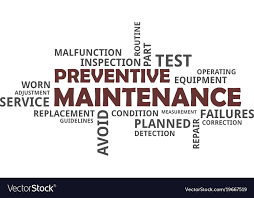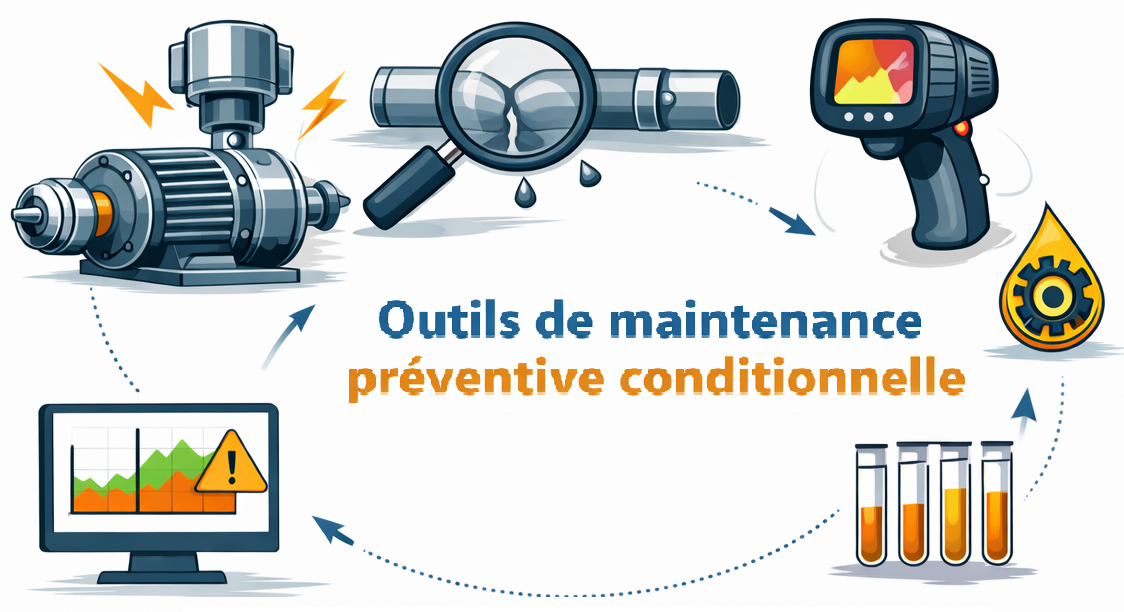
Le module « Outils de maintenance préventive conditionnelle » est un enseignement destiné aux étudiants de 3ème année Licence en Maintenance industrielle. Il vise à introduire les principes fondamentaux de la maintenance basée sur l’état réel des équipements.
Ce module met l’accent sur les techniques et outils permettant de surveiller l’état des systèmes industriels et d’anticiper les défaillances avant leur apparition, afin d’améliorer la fiabilité et la performance des installations de production. Il permet également aux étudiants de comprendre les stratégies de maintenance moderne contribuant à prolonger la durée de vie des équipements, réduire les arrêts non planifiés, optimiser l’utilisation des ressources et diminuer les coûts de maintenance.
En résumé, ce module constitue une introduction essentielle à la maintenance préventive conditionnelle, considérée comme une approche clé de la maintenance industrielle moderne.
- المعلم: seif eddine bousbia salah
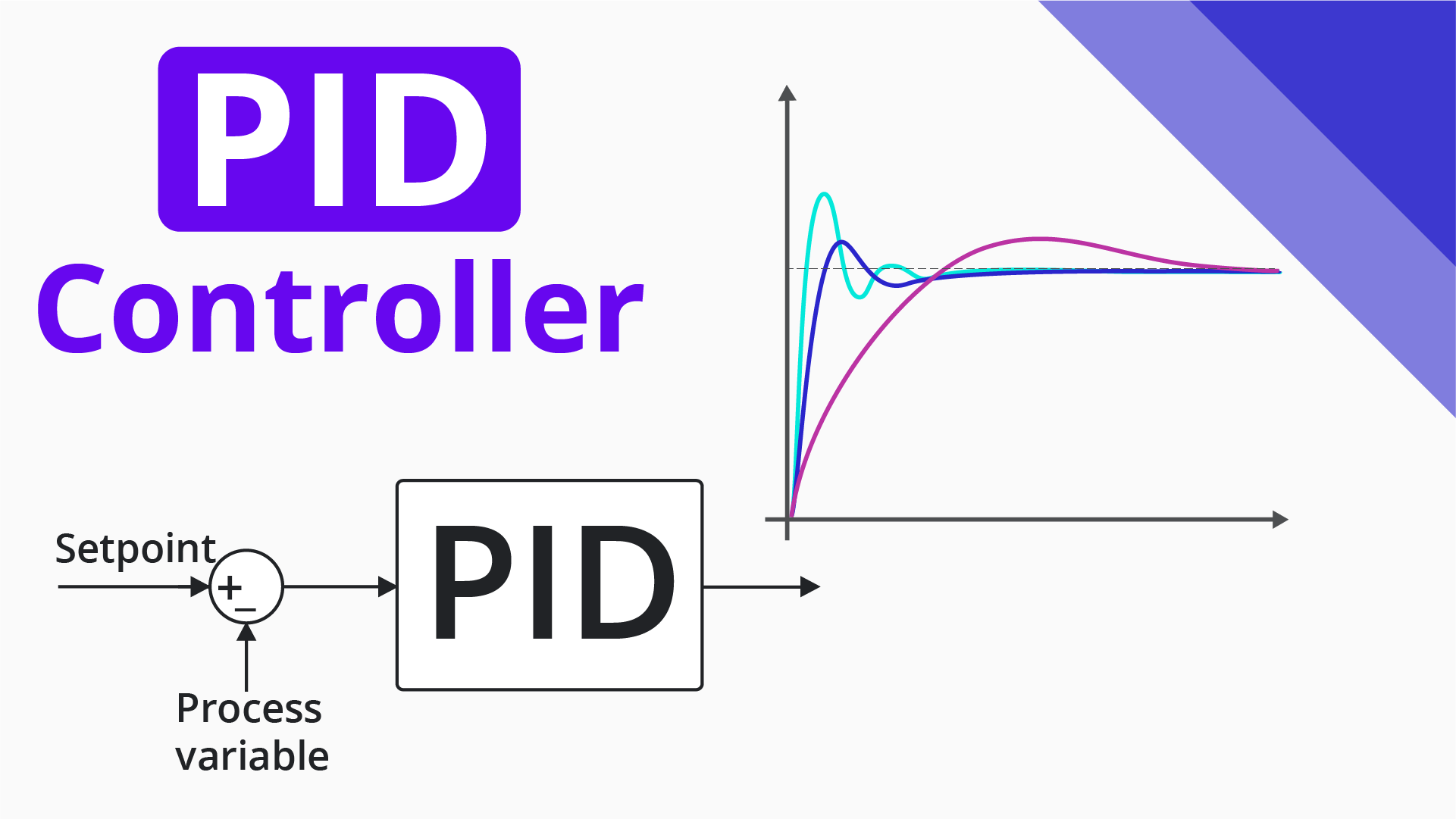
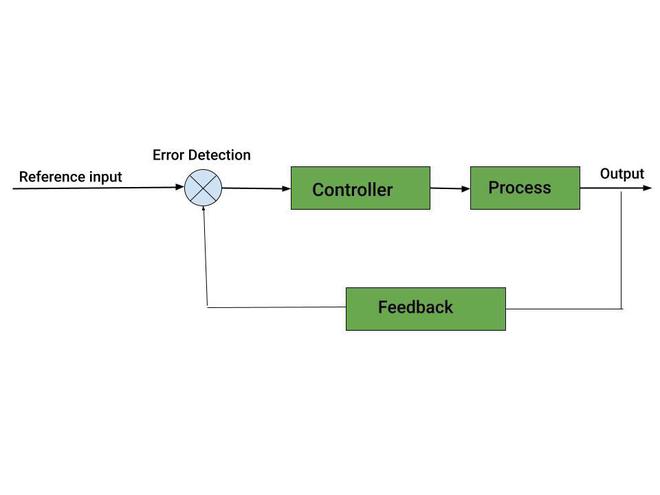
This course offers a comprehensive introduction to the principles and techniques of control systems, with a focus on automatic and linear system regulation. It begins by defining automatic systems and exploring fundamental control structures, namely open-loop and closed-loop systems, highlighting their components—sensors, controllers, and actuators—and their respective advantages and limitations. The course then progresses to the mathematical modeling of linear systems using differential equations and the Laplace transform, providing essential tools for system analysis in the frequency domain. Through the derivation of transfer functions and the study of block diagrams, students learn how to represent and analyze dynamic systems, simplify control structures, and evaluate system performance in terms of stability, accuracy, and responsiveness. Practical examples and schematic representations reinforce understanding of real-world applications such as level control, motor speed regulation, and automation in industrial processes.
- المعلم: Abdelkader Mahmoudi
- المعلم: Abdelkader Mahmoudi


التحضير للاندماج المهني في نهاية الدراسة من خلال عملية نضج فردية وجماعية.
تنفيذ مشروع ما بعد التخرج (متابعة الدراسة أو البحث عن عمل).
إتقان الأدوات المنهجية اللازمة لتحديد مشروع ما بعد التخرج.
التحضير للبحث عن عمل.
التوعية بريادة الأعمال من خلال تقديم لمحة عامة عن المعرفة الإدارية المفيدة لإنشاء الأنشطة.
- المعلم: Abdelkamel MAAMRI
- المعلم: KHALED MANSOURI