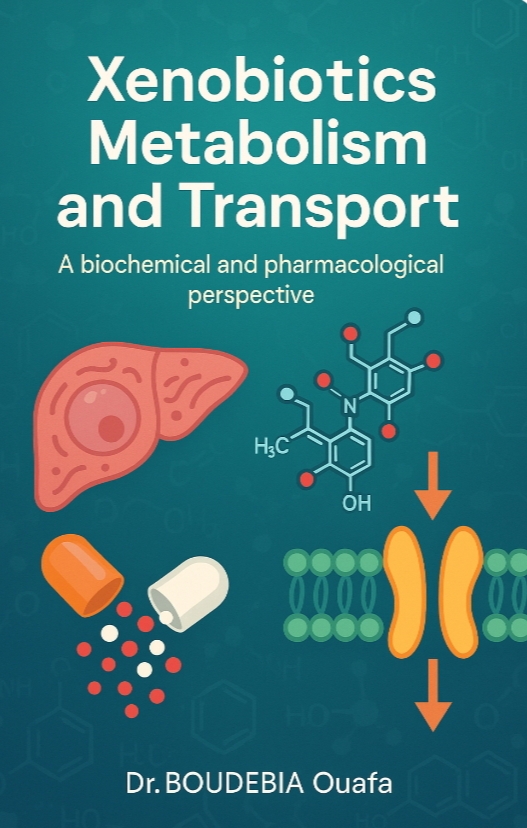
The study of xenobiotics (chemical substances not naturally produced by the body) is essential for understanding how the human organism processes drugs, pollutants, food additives, and other foreign compounds. This course focuses on the biological fate of xenobiotics through the major phases of absorption, distribution, metabolism, and excretion (ADME).
Particular emphasis is placed on metabolic transformations, which involve enzymatic processes aimed at making xenobiotics more water-soluble and less toxic. These transformations are categorized into Phase I reactions (e.g., oxidation, reduction, hydrolysis) and Phase II reactions (e.g., glucuronidation, sulfation, conjugation). The efficiency of these processes depends on several factors:
· Enzyme activity: Influenced by genetics, age, diet, and environmental exposure.
· Chemical structure: Affects reactivity and binding to metabolic enzymes.
· Presence of inducers or inhibitors: These can enhance or suppress metabolic pathways.
· Physiological conditions: Such as liver function, intestinal health, and microbiota composition.
Transport mechanisms are equally vital, as they regulate the movement of xenobiotics across biological membranes. This includes both passive diffusion and active transport mediated by specialized proteins like P-glycoproteins and organic anion transporters. These systems control access to target tissues and elimination pathways such as renal and biliary excretion.
Studying xenobiotic metabolism and transport serves two major goals:
· Predicting pharmacokinetics and toxicokinetics: Understanding how different variables (e.g., dose, route of administration, interactions) affect the disposition of xenobiotics in the body.
· Exploring mechanisms of action and toxicity: Since metabolism can both detoxify and bioactivate compounds, it is essential to link reaction pathways to possible therapeutic or adverse outcomes.
This course is fundamental for students aiming to work in toxicology, pharmacology, or environmental health sciences, where evaluating the risk and behavior of chemical agents in living systems is a core task.
- المعلم: boudebia ouafa
Fruit growing and viticulture are two major speculations which are rightly among the
concerns of Algerian agriculture. Many factors justify the importance that must be
given to these two disciplines. Therefore, it is imperative to pay particular attention to
the teaching of fruit arboriculture and viticulture which must occupy an important place
in agronomy training both theoretically and practically. The objective of these two
disciplines taught is to make the student aware of the place of fruit trees and vines at the
national level as well as the aspects relating to their botany, their biology and their
physiology as well as their methods of multiplication. Recommended prior knowledge
- المعلم: Azzeddine HADDAD